 Window lintels are essential structural components that support the masonry above window and door openings. In residential and commercial buildings throughout New York City, these components are frequently exposed to rain, snow, humidity and changing temperatures. Without proper protection, moisture can penetrate the surrounding masonry, cause steel lintels to corrode and contribute to cracks, brick deterioration and interior water leaks.
Waterproofing plays an important role in protecting these vulnerable areas. Properly installed flashing, durable sealants, repaired mortar joints and suitable moisture protection help prevent water from entering the building envelope. For property owners, understanding how window lintel waterproofing works can help prevent recurring leaks and reduce the need for extensive masonry repairs.
Why Is Window Lintel Waterproofing Important for NYC Buildings?
A window lintel is typically a horizontal structural component installed above a window opening to support the masonry and distribute the weight of the materials above it. Steel lintels are commonly used in brick buildings because of their strength and load-bearing capacity.
However, steel can deteriorate when exposed to persistent moisture and oxygen. As corrosion develops, rust can cause the metal to expand, placing pressure on the surrounding brickwork and mortar joints. This may result in cracked masonry, displaced bricks and visible damage around windows.
Buildings throughout NYC experience frequent rainfall, winter snow, freezing conditions and seasonal temperature changes. These environmental conditions can increase the risk of water penetration, particularly when flashing, sealants or mortar joints have deteriorated.
Professional waterproofing helps protect these areas by limiting moisture entry and maintaining the performance of the surrounding masonry system.
What Causes Water Penetration Around Window Lintels?
Before choosing a waterproofing method, it is important to identify how moisture is entering the building. Several conditions can contribute to water infiltration around window lintels.
1. Deteriorated Mortar Joints
Mortar joints connect individual bricks and help protect the masonry assembly from weather exposure. Over time, rain, snow, temperature fluctuations and natural ageing can cause mortar to crack, crumble or separate from surrounding bricks.
Damaged joints create openings through which water can enter the wall and reach the lintel area. If left untreated, moisture penetration may contribute to corrosion and further masonry deterioration.
Property owners should recognise the early signs that a Queens building needs brick pointing, particularly when cracked mortar, missing joints, loose bricks or recurring water stains appear around window openings.
2. Failed Flashing and Sealants
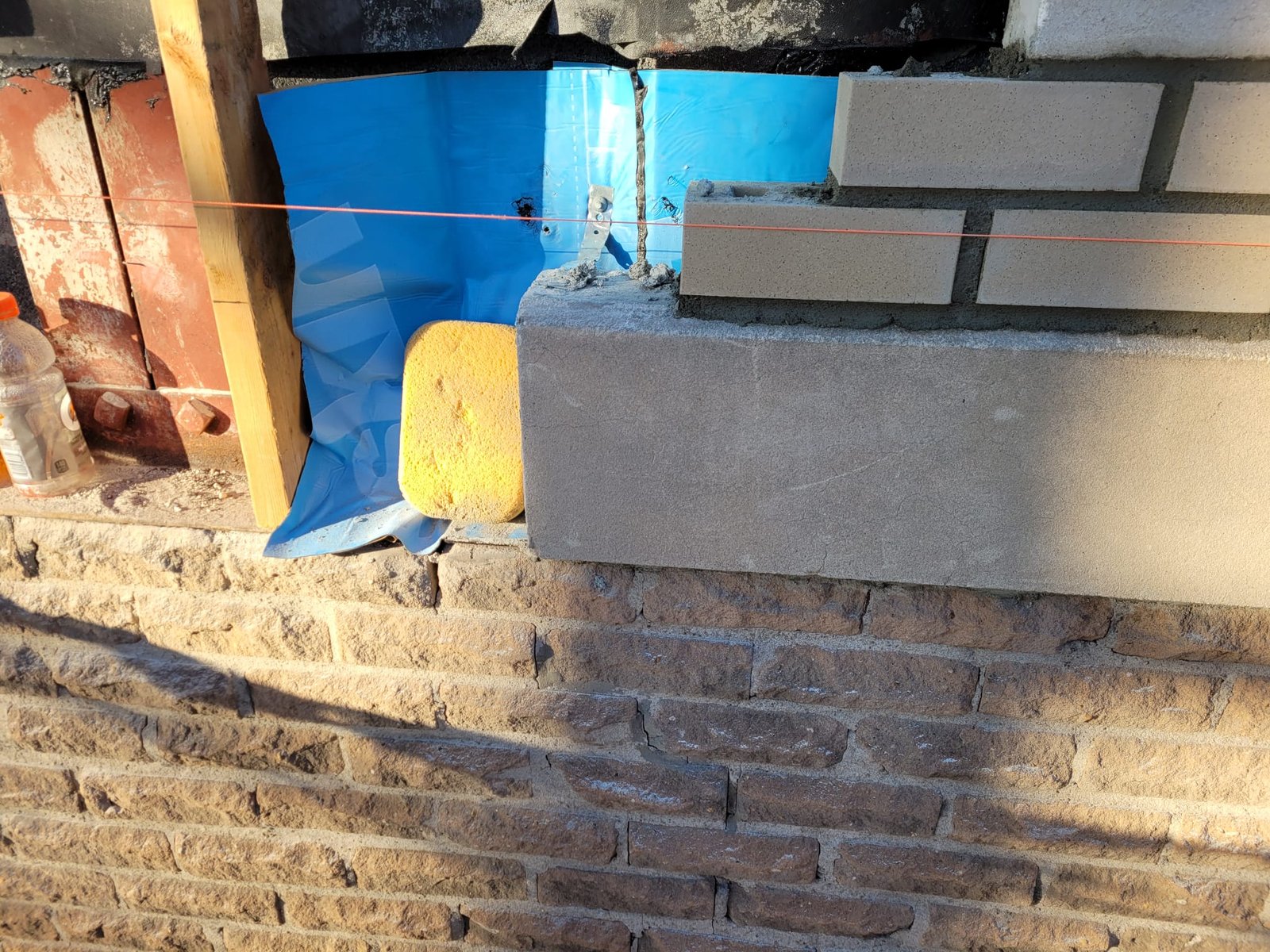
Flashing is an important component of window lintel protection because it helps direct water away from vulnerable masonry connections. When flashing becomes damaged, improperly installed or deteriorated, rainwater can enter behind the brickwork and reach the steel lintel.
Similarly, old or separated sealants around window frames can create gaps that allow moisture to penetrate. Regular inspection and timely replacement of failed materials help maintain effective water protection.
3. Steel Lintel Corrosion
Steel lintels can develop rust when moisture repeatedly reaches their surfaces. As corrosion progresses, the metal may expand and place additional pressure on the surrounding masonry.
This expansion can cause horizontal or stepped cracks, displaced bricks and deterioration near window openings. Waterproofing can help prevent further moisture exposure, but severely corroded lintels may require professional repair or replacement rather than surface treatment alone.
4. Poor Water Drainage
Improper drainage around window openings can allow rainwater to collect near the lintel and surrounding masonry. Missing drip edges, blocked weep holes and poorly designed flashing details may contribute to repeated moisture exposure.
Correcting drainage problems is an important part of a long-term waterproofing solution because simply applying sealant without addressing the source of water may result in recurring leaks.
How Does Window Lintel Waterproofing Prevent Rust and Brick Damage?
Professional waterproofing focuses on controlling moisture before it reaches vulnerable structural and masonry components. The process involves examining the affected area, identifying water entry points and selecting suitable repair and protection methods.
1. Preventing Moisture from Reaching Steel Lintels
One of the primary purposes of waterproofing is to reduce direct moisture exposure around steel lintels. Proper flashing, compatible sealants and suitable protective systems help limit water penetration through joints and vulnerable connections.
By reducing repeated moisture exposure, these measures help lower the risk of corrosion and protect the surrounding masonry.
2. Protecting Mortar Joints and Brickwork
Waterproofing is more effective when deteriorated mortar joints are repaired as part of the restoration process. Damaged mortar should be removed carefully and replaced with a compatible material that provides a durable connection between bricks.
This helps reduce openings through which rainwater can enter the wall. Property owners dealing with widespread exterior deterioration may also consider professional facade restoration services in NYC to address related masonry and building envelope problems.
3. Reducing Interior Water Leaks
Water entering around window lintels can travel through masonry and appear inside the building as damp patches, peeling paint, discoloured walls or recurring leaks near windows.
Proper waterproofing addresses vulnerable exterior connections and helps prevent moisture from reaching interior wall surfaces. However, the source of the leak must be correctly identified because water may also enter through window frames, roof connections or other damaged areas.
4. Improving the Durability of Exterior Masonry
Repeated water penetration can gradually weaken mortar joints, damage brick surfaces and affect other exterior building components. Appropriate waterproofing and masonry restoration help protect these materials against continued moisture exposure.
Combining proper drainage, flashing repairs, sealant replacement and masonry maintenance provides a more comprehensive approach than relying on a surface coating alone.
What Waterproofing Methods Are Used for Window Lintels?
The correct waterproofing method depends on the lintel material, the condition of the surrounding masonry and the source of water penetration.
Flashing Installation and Repair: Properly installed flashing helps direct rainwater away from the lintel and surrounding wall assembly. Damaged or improperly installed flashing should be corrected to reduce moisture entry behind exterior masonry.
Sealant Replacement: Deteriorated sealants around window frames and masonry joints can allow water to enter vulnerable connections. Removing failed sealant and applying compatible replacement materials helps restore these protective joints.
Mortar Joint Repointing: When mortar becomes cracked or deteriorated, repointing helps restore the joints between bricks and reduce water penetration. The replacement mortar should be compatible with the existing masonry.
Protective Coatings: Suitable protective coatings may be used on certain exposed surfaces when appropriate for the material and building conditions. These products should not replace necessary flashing, drainage or structural repairs.
Drainage Improvements: Correcting blocked drainage openings, restoring drip edges and addressing water collection helps prevent repeated moisture exposure around window openings.
For broader building protection, property owners can explore professional waterproofing contractors in NYC to understand the available solutions for different moisture-related problems.
What Are the Warning Signs That Your Window Lintel Needs Waterproofing?
Identifying early signs of moisture damage can help property owners arrange professional assessments before deterioration becomes more extensive.
Common warning signs include:
- Rust stains: Reddish or brown marks appearing around the window opening may indicate steel corrosion.
- Cracked mortar joints: Open or deteriorating joints can allow rainwater to enter the masonry.
- Loose or displaced bricks: Movement around the lintel may indicate corrosion-related expansion or other masonry problems.
- Interior water stains: Discolouration or damp patches near windows may indicate water penetration.
- Peeling paint: Repeated moisture exposure can cause interior paint and finishes to deteriorate.
- Efflorescence: White mineral deposits on brick surfaces may indicate moisture movement through the masonry.
- Recurring leaks: Water entering during rainfall may suggest damaged flashing, sealants or other exterior connections.
When these signs appear together, a professional inspection can help determine whether waterproofing, masonry repairs or lintel replacement is necessary.
When Should a Window Lintel Be Repaired or Replaced?
Not every damaged lintel requires complete replacement. Minor surface corrosion, deteriorated sealants and isolated mortar defects may be addressed through appropriate restoration work when the structural component remains serviceable.
However, extensive corrosion, significant metal expansion, visible displacement, sagging masonry or severe cracking may indicate a more serious problem.
In such situations, applying waterproofing materials alone will not restore the lintel’s structural capacity. A qualified contractor should assess the condition of the metal, surrounding brickwork and supporting connections before recommending repairs or replacement.
Property owners experiencing recurring leaks or visible lintel deterioration can explore professional window lintel leak repair in Queens to understand the available repair and waterproofing solutions.
Why Professional Window Lintel Waterproofing Matters in NYC?
Window lintel waterproofing requires more than applying a protective product to an exposed surface. Contractors must understand how flashing, mortar joints, sealants, drainage and structural components work together to protect the building envelope.
A professional assessment helps identify hidden moisture entry points, distinguish surface deterioration from structural damage and determine which repairs are necessary. It also helps ensure that replacement materials and waterproofing methods are appropriate for the existing masonry.
Regular exterior inspections and timely maintenance can help reduce recurring water problems and protect the long-term condition of residential and commercial buildings.
Conclusion
Window lintel waterproofing is an important part of maintaining NYC buildings because it helps protect steel lintels, surrounding brickwork and interior spaces from moisture-related deterioration. Damaged flashing, deteriorated mortar joints, failed sealants and poor drainage can allow water to enter vulnerable areas, increasing the risk of rust, masonry cracks and recurring interior leaks.
Addressing these problems requires identifying the source of moisture and selecting suitable repair methods. Proper flashing, mortar joint restoration, sealant replacement and drainage improvements can help reduce water penetration and protect exterior masonry. When corrosion or structural deterioration is extensive, professional repair or lintel replacement may also be necessary.
Trice Restoration Inc. provides professional masonry restoration, window lintel repair and waterproofing solutions for residential and commercial properties throughout NYC. If your building has rust stains, cracked masonry or recurring leaks around window openings, contact the team to discuss your requirements and arrange a professional assessment.